Cities are growing rapidly, but their water sources are not growing at the same pace. As populations expand and water demand increases, many urban areas are beginning to face growing pressure on their water supply.
Across many cities today, water shortages are becoming more frequent. During the summer months, the situation becomes even more visible. Groundwater levels drop, municipal supply becomes limited, and buildings often rely more on tanker water to meet daily demand.
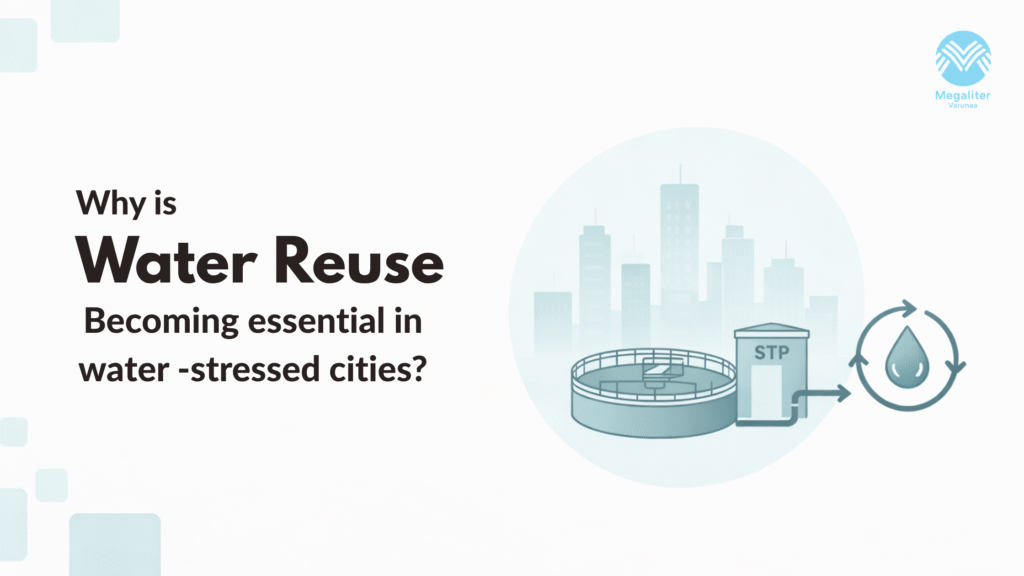
As these challenges grow, one solution is receiving increasing attention: WATER REUSE.
Instead of treating wastewater as something to dispose of, cities and buildings are beginning to see it as a resource that can be reused.
Why Cities Are Facing Water Stress
Urban water demand has grown significantly over the past few decades. At the same time, traditional water sources are under increasing pressure due to several factors:
• Declining groundwater levels
• Irregular rainfall patterns
• Growing urban demand
• • Pollution of lakes and rivers from untreated sewage affects urban lake ecosystems.
This imbalance between supply and demand has made water management one of the key challenges for growing cities.
The Role of Wastewater in Urban Water Management
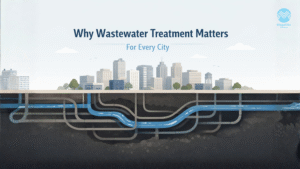
Every building and community generates wastewater every day. Traditionally, this water has been treated and discharged from the city.
However, properly treated wastewater can be reused for several non-potable purposes, highlighting the growing importance of wastewater treatment in cities.
Instead of relying entirely on fresh water, cities can reuse part of the water that has already been consumed.
This approach helps reduce the demand placed on limited freshwater sources.
Where Treated Water Can Be Reused
Once wastewater is treated to the required standards, it can be reused for several everyday activities within buildings and urban spaces.
• Toilet flushing using treated water from the building’s STP
• Landscaping and irrigation of gardens
• Cooling towers in commercial buildings
• Cleaning of common areas and roads
Since these activities do not require drinking-quality water, treated wastewater becomes a practical alternative.
Benefits of Water Reuse for Cities
Water reuse offers several advantages for water-stressed cities. It helps reduce dependence on freshwater sources, lowers pressure on groundwater extraction, and allows cities to manage water resources more efficiently.
For buildings and communities, reuse can also reduce reliance on tanker water and help control water costs over time.