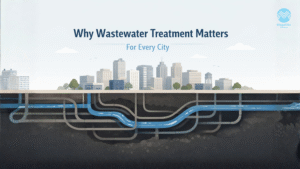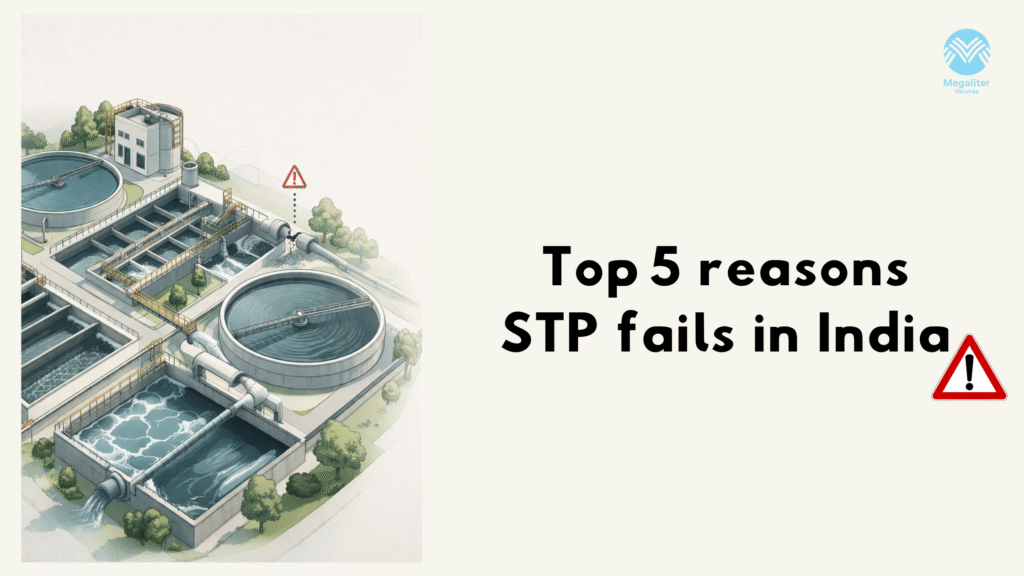
Across many cities and urban communities in India, Sewage Treatment Plants (STPs) have been installed to manage wastewater and protect water bodies. Yet many of these plants do not operate as intended.
In many cases, STPs run below capacity, function inefficiently, or stop working altogether. When treatment systems fail, untreated sewage can enter rivers, lakes, and groundwater sources.
Understanding why STPs fail is an important step toward improving wastewater management and building more reliable sanitation infrastructure.
Why STP Performance Matters
Sewage Treatment Plants are designed to treat wastewater before it is released into the environment. When they function properly, they help reduce pollution, protect water bodies, and improve sanitation systems in growing cities.
However, when STPs fail or operate inefficiently, untreated sewage can enter rivers, lakes, and groundwater sources.
This not only harms ecosystems but also creates long-term public health risks. This is why identifying the reasons behind STP failures is essential for improving wastewater treatment systems.
1. Poor Operation and Maintenance
One of the most common reasons STPs fail is poor operation and maintenance. Even well-designed treatment plants require regular monitoring, skilled operators, and routine maintenance to function effectively.
Without proper oversight, equipment may malfunction, and the treatment process becomes inefficient, especially in large commercial complexes.
2. Inadequate Design for Actual Wastewater Load
Many STPs are designed based on estimated wastewater volumes. However, population growth and changing usage patterns can quickly exceed these estimates.
When a plant receives more wastewater than it was designed to handle, treatment efficiency drops, and the quality of treated water may not meet the required standards.
3. Irregular Power Supply
Wastewater treatment processes rely on equipment such as pumps, blowers, and aerators. In areas with frequent power interruptions, STPs may struggle to operate continuously. These interruptions can disrupt biological treatment processes and affect plant performance.
4. Lack of Skilled Personnel
Operating a sewage treatment plant requires trained personnel who understand treatment processes and system monitoring.
In many cases, STPs underperform because there are not enough trained operators available to manage the system effectively.
5. Poor Sludge Management
Wastewater treatment produces sludges that must be handled and disposed of properly. If sludge management is neglected, it can accumulate in the system and reduce plant efficiency. Proper sludge handling is essential to maintain consistent treatment performance.
Moving Toward More Reliable STPs
Improving STP performance requires better planning, consistent maintenance, and professional management of treatment systems.
Many urban residential communities and commercial complexes struggle to keep their STPs functioning efficiently because operating these systems requires technical expertise and continuous monitoring.
Through its STP-as-a-Service model, Megaliter Varunaa works with residential and commercial properties to ensure that treatment plants are properly operated, maintained, and monitored over the long term, helping communities manage wastewater more reliably and sustainably.