In many cities, the arrival of summer brings a familiar worry: the possibility of water shortages. As temperatures rise and rainfall becomes scarce, the pressure on urban water supply systems begins to increase.
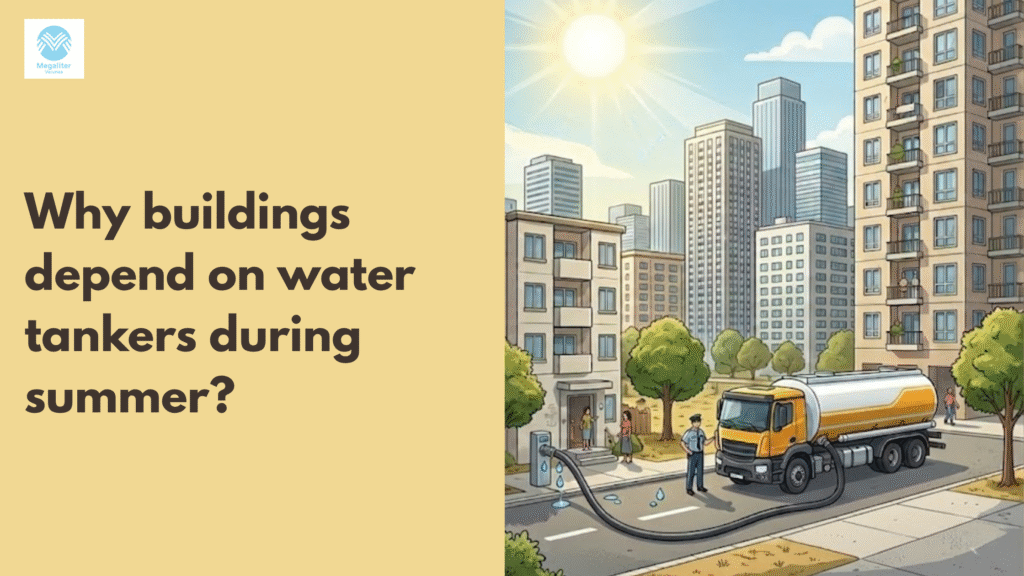
For residential complexes, commercial buildings, and office campuses, this often leads to one common solution: water tankers. When municipal supply becomes limited, tanker water helps buildings meet their daily needs.
While tankers provide a short-term solution, growing dependence on them also reveals deeper challenges in how cities manage water.
Why Water Demand Increases in Summer
Water consumption in buildings typically rises during the hotter months. Higher temperatures increase the need for water across several everyday activities.
Some common reasons include:
• Greater water use for cooling systems in commercial buildings
• Increased landscaping and irrigation needs
• Higher daily water consumption by residents and occupants
• More frequent cleaning and maintenance activities
As demand rises, existing municipal supplies often struggle to keep up.
Limited Municipal Water Supply
Most cities rely on reservoirs, lakes, and groundwater for their water supply, making strong urban wastewater management systems essential for long-term water sustainability.
As a result, municipal water supply may become less frequent or insufficient to meet the needs of large buildings. To bridge this gap, many residential and commercial properties have begun to rely more heavily on tanker water.
The Challenges of Tanker Dependence
Although tanker water provides an immediate solution, relying on it over long periods can create several challenges.
Buildings may experience:
• Rising water expenses during peak summer months
• Unpredictable tanker availability
• Increased pressure on groundwater sources
• Higher operating costs for residential and commercial properties
Over time, this dependence can make water management more complex and expensive.
Looking Beyond Tankers
As cities continue to grow, relying entirely on tanker water is not a sustainable long-term approach. Many buildings are beginning to explore ways to manage water more efficiently within their own premises.
Improving water monitoring, reducing wastage, and reusing treated wastewater are some of the ways buildings can reduce their dependence on external water sources.
These approaches help buildings manage water demand more responsibly while improving long-term water resilience.