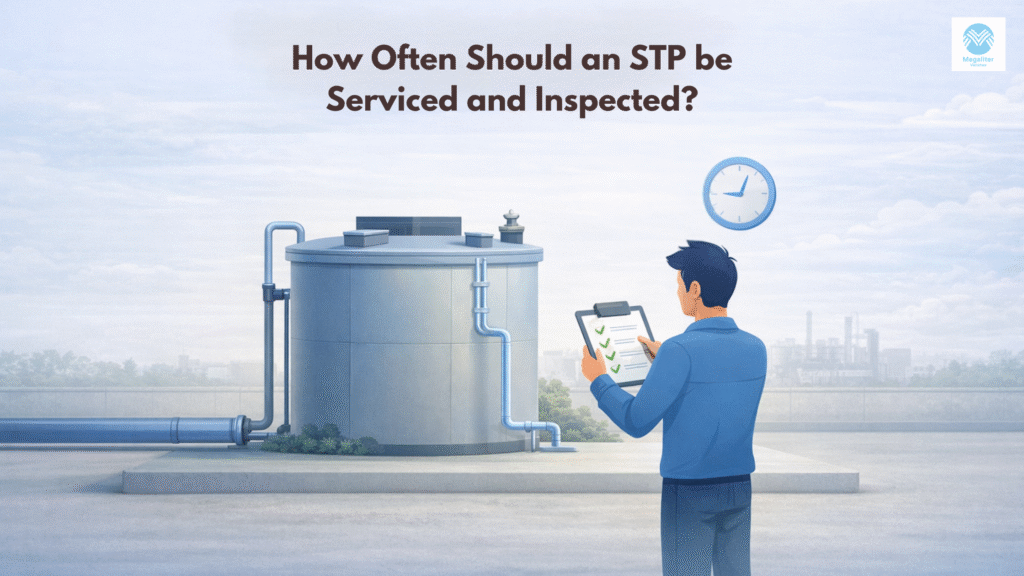
A sudden odor, poor water quality, or even a compliance notice can quickly bring attention to an STP.
In many cases, these problems appear not because the plant was poorly designed, but because it has not been serviced or inspected consistently.
This raises an important question for facility teams and property managers.
Why Regular Servicing Matters
A Sewage Treatment Plant is not a system that can run unattended for long periods. It involves mechanical equipment, biological treatment processes, and monitoring systems that need regular attention.
When servicing and inspections are delayed, small operational issues can slowly build up. Over time, they may lead to:
• Reduced treatment efficiency
• Equipment wear and tear
• Increased operational costs
• Risk of non-compliance with environmental norms
Regular inspections help identify these issues early and keep the system running reliably. They also help ensure the plant continues to meet PCB wastewater treatment norms.
Typical STP Inspection and Servicing Schedule
While exact schedules may vary depending on the plant size and technology, most STPs follow a routine maintenance cycle.
- Daily monitoring
Basic checks are carried out to observe flow levels, aeration, and general plant operation.
- Weekly inspections
Key equipment, such as pumps, blowers, and screens, is inspected to ensure they are functioning correctly.
- Monthly servicing
Mechanical components are cleaned, adjusted, and tested to maintain stable performance.
- Quarterly water testing
Treated water quality is tested to ensure it meets Pollution Control Board standards.
- Annual maintenance review
A detailed inspection of the plant is conducted, including equipment servicing and overall system evaluation.
Following a routine schedule helps prevent unexpected breakdowns and ensures consistent treatment performance.
Signs that your STP May Need Immediate Inspection
Even with a maintenance schedule in place, certain warning signs indicate that the plant needs attention
Some common indicators include:
• Strong or unusual odors around the plant
• Poor clarity in treated water
• Unusual noise from pumps or blowers
• Excess sludge buildup or overflow
• Sudden increase in electricity consumption
The Importance of Consistent Oversight
For many buildings and campuses, the real challenge is not installing the STP but maintaining consistent oversight. Without structured monitoring and routine servicing, even well-designed systems can gradually lose efficiency and require performance improvement interventions.
In some cases, buildings address this challenge through models where the STP is operated and maintained by specialists under long-term agreements, such as the Zero CapEx approach offered by Megaliter Varunaa.
Regular inspections help ensure that the treatment process remains stable and compliant with environmental regulations.