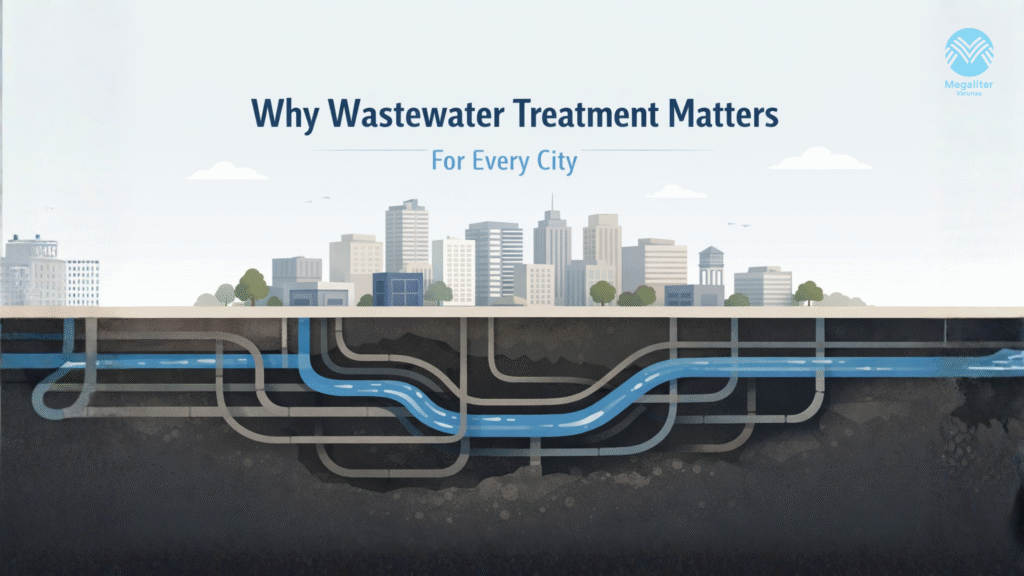
Water shapes the way our cities grow. Homes, offices, malls, hospitals, and factories all depend on reliable supply every single day. But as demand increases, cities face a growing challenge: what happens to the water after we use it?
Across India, millions of liters of wastewater flow out of buildings and into drains, often without proper treatment
Wastewater treatment is how cities break this cycle. It turns used water into a safe resource that can be reused or released responsibly. And for most urban communities, it begins right inside their own building.
Wastewater Treatment and Urban India
1. Cities are running out of water – Every year, Indian cities rely more heavily on borewells and tankers. Treating and reusing wastewater reduces this pressure. A single functional STP can save thousands of liters a day that otherwise would be paid for at tanker rates.
2. Many STPs look fine from the outside but fail on the inside – Aeration drops, sludge builds up, the biology weakens, sensors stop working, and before anyone notices, the STP stops treating water effectively. The community continues to pay for an STP that is not delivering results.
3. Untreated discharge is no longer acceptable – Regulations, neighbors, and local authorities are increasingly strict. Buildings can face complaints, penalties, or even shutdown notices if their STP does not meet standards.
4. Reuse is one of the easiest sustainability wins – Treated wastewater can run flushing systems, green areas, cooling towers, or construction needs. It saves fresh water and reduces monthly operating costs.
Where Wastewater Treatment Is Needed the Most
Apartment and gated communities – Thousands of residents depend on a single STP. When it underperforms, everyone pays the price through higher maintenance fees and tanker bills.
Commercial buildings and tech parks – These spaces need continuous operations and compliance. Consistent treatment prevents downtime and keeps their environmental footprint in check.
Hospitals, hotels, and institutions – These facilities generate wastewater daily and need stable treatment to operate responsibly.
Industries – Effluents must be treated properly to avoid environmental damage and legal consequences.
The Future of Wastewater in Indian Cities
The water we already have is the water we must learn to protect. Wastewater treatment is not just an environmental requirement. It is one of the strongest tools urban India has to fight water scarcity.
Every STP that works well reduces tanker dependence, protects lakes, strengthens public health, and creates a more water secure city.
At Megaliter Varunaa, we see wastewater as an opportunity. One revived STP can save an entire community. Thousands can save a whole city. One ST(e)P at a time.