When a city lake starts to smell or turn green, the explanation usually sounds familiar. Garbage dumping, construction runoff, and poor maintenance.
The response follows a predictable pattern. Clean the lake, fence it, or add aerators.
What rarely comes up is a quieter question.
What is flowing into the lake every single day?
What Actually Feeds Urban Lakes
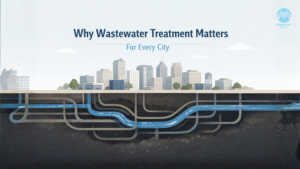
Urban lakes are not filled only by rain. For most of the year, they receive water through drains that run across neighbourhoods and buildings. This water has already been used once before it reaches the lake.
Every apartment, office, hospital, and commercial complex releases wastewater daily. Ideally, this water is treated before it leaves the building. In practice, treatment quality varies. Some systems perform well. Others function just enough to stay unnoticed.
Why the Impact Is Slow
Lakes do not respond to single events. They respond to patterns. When partially treated water enters repeatedly, nutrients build up. Organic matter accumulates. The change is gradual, then suddenly visible.
The Role of Decentralized STPs
Most cities rely on decentralized STPs. Thousands of small treatment plants operate quietly in basements and service areas. When they work well, they protect everything downstream. When they do not, the impact is spread out and easy to miss. A single underperforming STP seems insignificant. A city full of them is not.
Why Lake Clean-ups Fall Short
Restoration efforts usually focus on what can be seen at the surface. But unless the quality of incoming water changes, the lake continues to receive the same inputs that caused the problem in the first place. The lake improves briefly. Then slowly, the same signs return.
What Lakes Are Really Showing Us
Seen this way, lakes are not just water bodies. They are indicators. They reflect how consistently a city treats its wastewater.
Froth, odour, or algal growth are not sudden failures. They are delayed signals.
Once that connection is made, attention naturally shifts upstream. Away from dramatic fixes, and toward the everyday treatment systems that quietly decide the health of urban water bodies.
Lakes remember what cities forget.